EN FR
All projects

Distributed systems · HR product

SmartHR360 — Predictive HR Platform

A predictive HR platform connecting seven Django/DRF services, first-party RS256 identity and a separate TypeScript/Next.js product interface.

SmartHR360 — Predictive HR Platform product overview
2025 - 2026Architect and Developer

01

The problem

HR workflows span identity, core records, workload, career, skills, policy and retention. A single coupled application makes those concerns hard to evolve, observe and review independently.

Constraints

  • Services need explicit data ownership and controlled cross-service communication.
  • Automated recommendations must remain explainable and reviewable by HR.
  • The web product must remain usable independently from backend availability through a clearly labeled demo mode.

02

My contribution

03

Technical decisions

01

First-party RS256 identity

The authentication service issues asymmetric JWTs and a shared package gives every service one verification path without distributing the private key.

Trade-off: The team owns key rotation and authentication operations, but authorization behavior remains inspectable in the same codebase.
02

Database boundary per service

Each Django/DRF service owns its PostgreSQL boundary and exposes domain behavior through an API instead of sharing application tables.

Trade-off: Cross-domain workflows require explicit integration and failure handling in exchange for clearer ownership.

03

Demoable frontend, deployable platform

The separate Next.js interface includes a clearly labeled backend-free demo mode, while Docker Compose and k3s definitions cover integrated environments.

Trade-off: Demo data improves reviewability but must never be confused with a connected or production environment.

04

Verifiable outcomes

  1. The implemented Next.js frontend is a separate repository and includes a backend-free demo path.
  2. The umbrella repository documents service composition, Kubernetes delivery and shared platform concerns.
  3. Prometheus and Grafana provide technical and product-level observability.

05

Product evidence

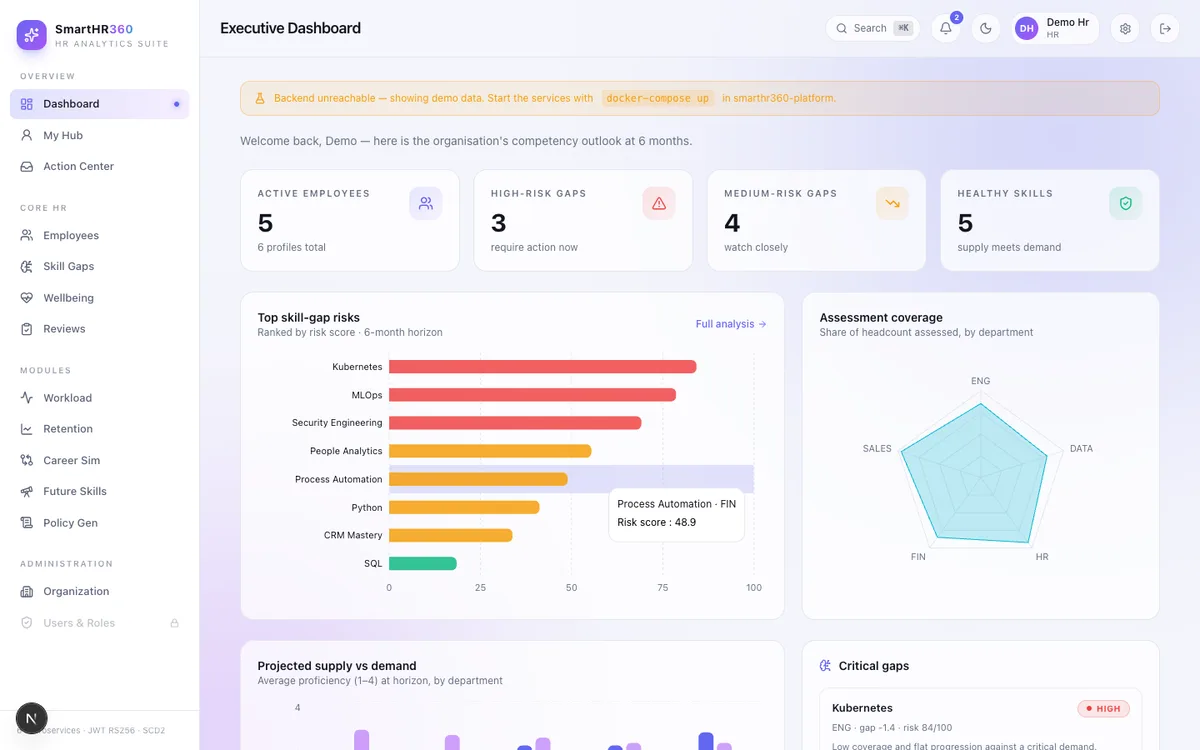
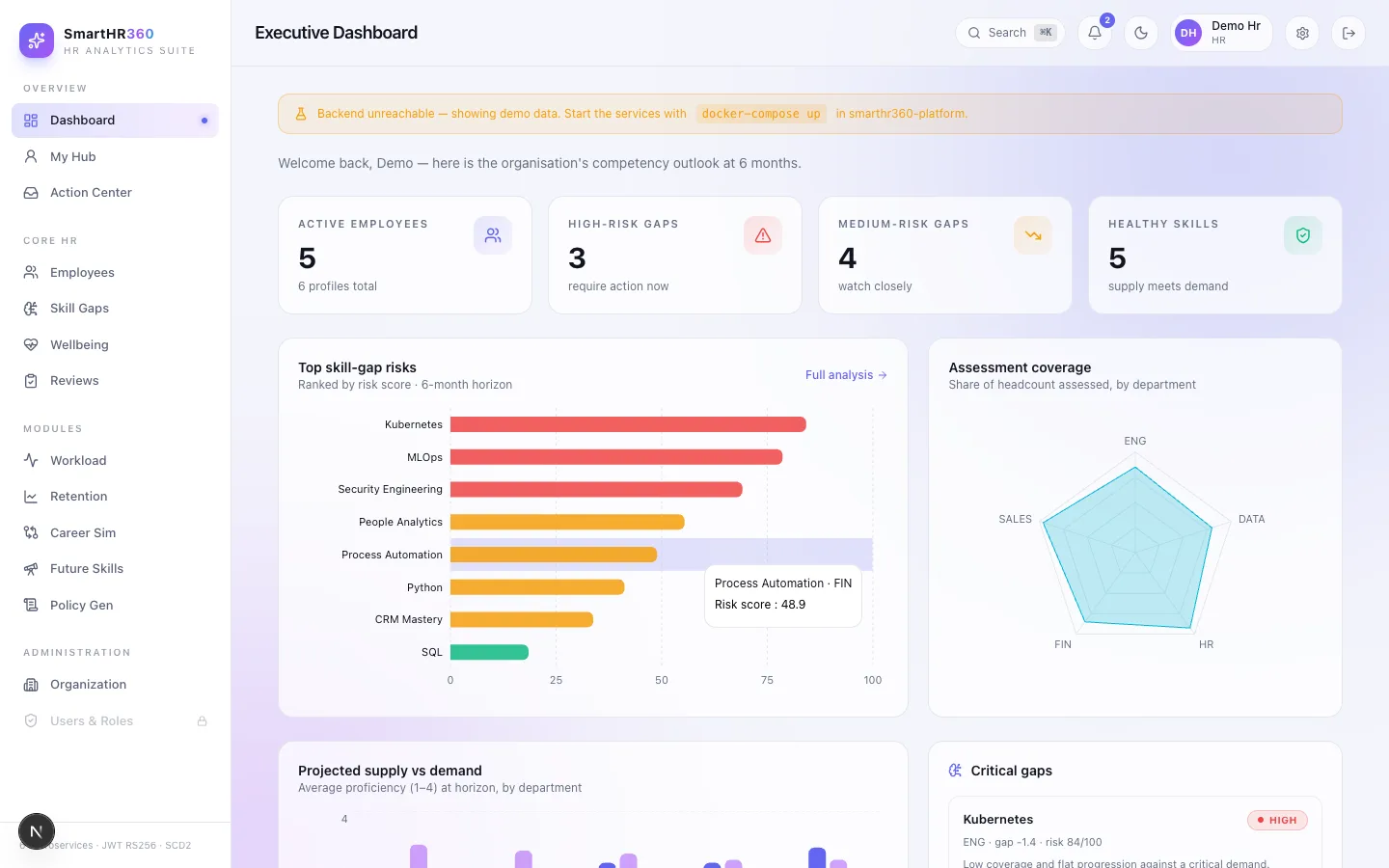
Workforce overview
Real capture of the separate Next.js frontend using its clearly labeled backend-free demo data.Seeded-data captureDemo modeCaptured: Source commit: 27c3f8fb
01Seeded demo data

Workforce overview

Real capture of the separate Next.js frontend using its clearly labeled backend-free demo data.

View evidence
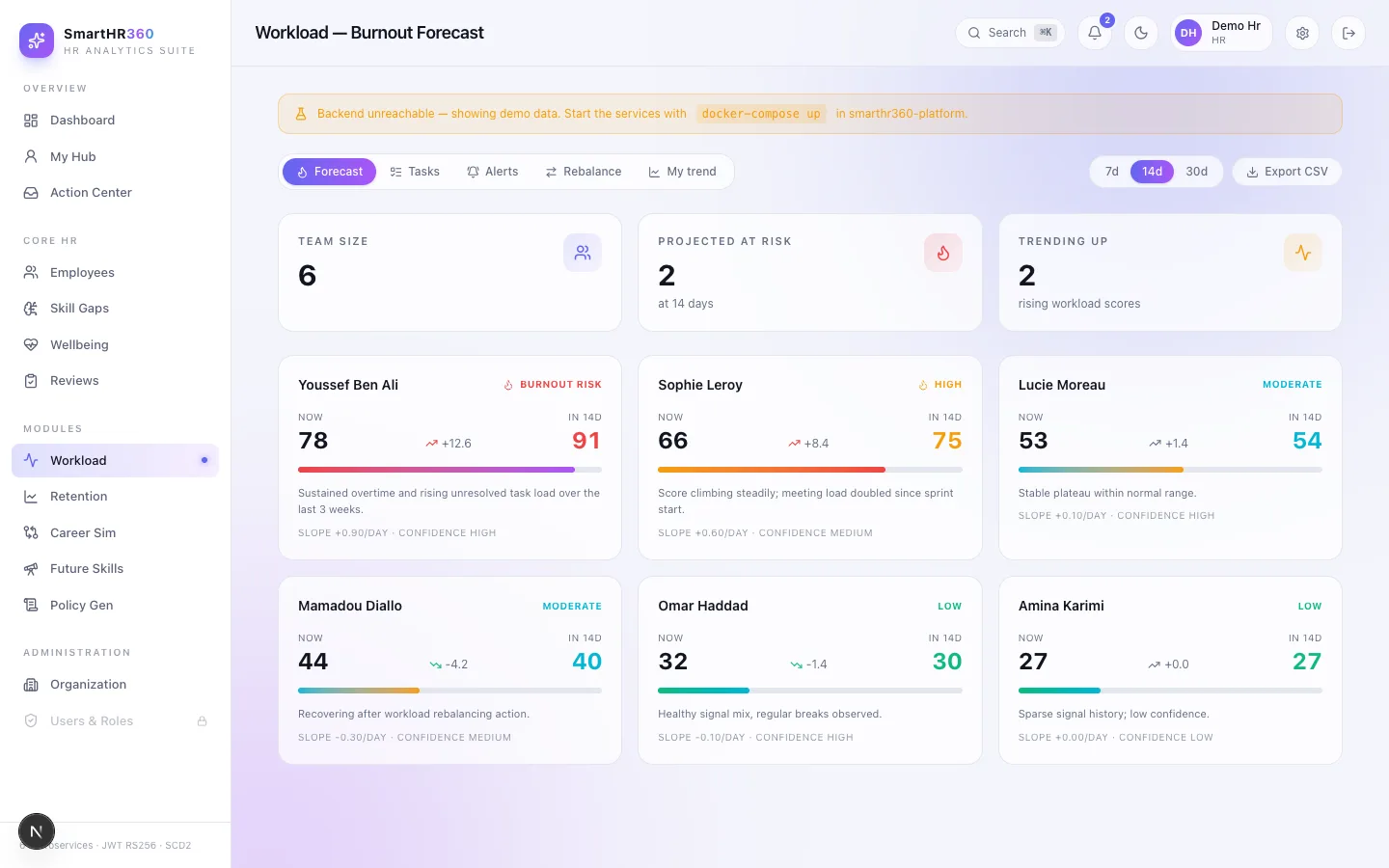
Workload workflow
Real application screen captured from the repository-provided demo mode; values are demonstration data, not workforce results.Seeded-data captureDemo modeCaptured: Source commit: 27c3f8fb
02Seeded demo data

Workload workflow

Real application screen captured from the repository-provided demo mode; values are demonstration data, not workforce results.

View evidence
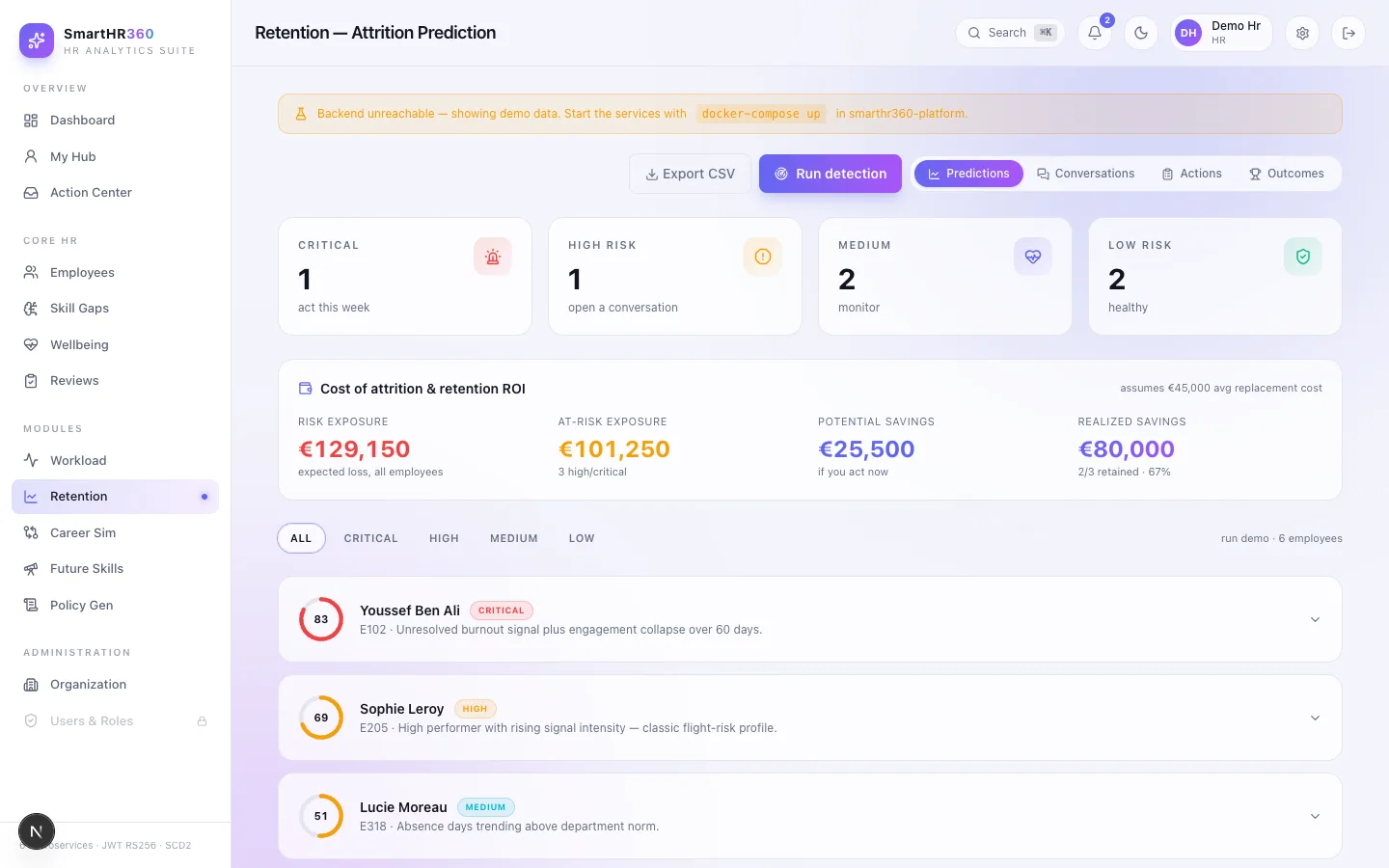
Retention dashboard
Real application screen from the demo frontend, labeled to avoid implying connected or production employee data.Seeded-data captureDemo modeCaptured: Source commit: 27c3f8fb
03Seeded demo data

Retention dashboard

Real application screen from the demo frontend, labeled to avoid implying connected or production employee data.

View evidence

06

What I learned

  • Service boundaries are product decisions because they shape workflow latency and failure modes.
  • AI assistance in HR needs review states and deterministic fallbacks.

07

What I would change

  • Introduce a smaller end-to-end domain slice before expanding every service.
  • Capture versioned product screenshots and an architecture walkthrough with each milestone.
Next projectÉcole Platform — Trilingual School ERP/LMS